

Math games
Math games for kindergarten: counting, adding and shapes
The best kindergarten math games use things you already have: count steps and snacks, compare two piles, take cookies out of a jar, spot shapes on a walk. Here are 12 quick games matched to what kindergarten math covers, plus the number games Cleo makes from what your child loves.
 Ages 5–6
Updated November 2026 · For ages 5–6 · By the Cleoland team

This year
What kindergarten math covers
Most US kindergartens follow standards like the Common Core. The games below practice each part.
Counting
Counting to 100 by ones and tens, and counting groups of up to 20 things.
Comparing
Which group has more, fewer or the same? Which number is bigger?
Adding and taking away
Within 10, using fingers, objects and drawings. Quick and confident within 5.
Shapes
Naming circles, squares, triangles, rectangles, cubes, cones and spheres.
Measuring
Comparing which is longer, taller, heavier or holds more.
Math games for kindergarten
Counting games
Race to 20
Counting on
Take turns rolling a die and moving a toy along a line of 20 spoons or blocks. First to 20 wins.
Make it harder: start from any number, not just 1.
Ages 5–6
Tower of ten
Counting and tens
Build towers of exactly ten blocks, then count the towers by tens: 10, 20, 30.
Make it harder: count all the way to 100 by tens.
Ages 5–6
How many in ten seconds?
Counting actions
Count jumps, claps or hops in ten seconds. Write the number down and try to beat it.
Make it harder: count by twos.
Ages 5–6
Math games for kindergarten
More, less and the same
Snack seesaw
More or less
Make two small piles of crackers. Which has more? Count to check, then make them the same.
Make it harder: say how many more.
Ages 5–6
Top card
Bigger number
Use number cards 1 to 10. Each player flips one; the bigger number keeps both.
Make it harder: the smaller number wins.
Ages 5–6
Longer or shorter?
Measuring
Hold up two things from the house. Which is longer? Line them up to check.
Make it harder: measure with paper clips or hand spans.
Ages 5–6
Math games for kindergarten
Adding and taking away games

Cookie jar
Taking away
Put 7 pretend cookies in a bowl. Teddy eats 3. How many are left? Check by counting.
Make it harder: start with 10.
Ages 5–6
Two hands
Ways to make 5
Hide 5 small things in your two hands. Show one hand: how many are in the other?
Make it harder: play with 10.
Ages 5–6
Bus stop
Adding and taking away
Toy passengers get on and off a bus: “3 on the bus, 2 get on. How many now?”
Make it harder: some get on and some get off at the same stop.
Ages 5–6
Math games for kindergarten
Shape and pattern games
Shape walk
Shapes
Go on a walk and spot circles, rectangles and triangles: wheels, doors, roofs.
Make it harder: find solid shapes too, like a ball (sphere) or a can (cylinder).
Ages 5–6
Pattern snake
Patterns
Make a line of objects in a pattern (fork, spoon, fork, spoon) and ask what comes next.
Make it harder: use a three-part pattern.
Ages 5–6
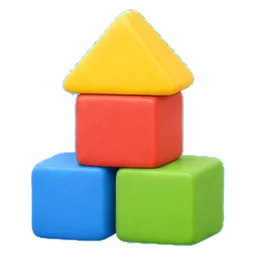
Copy the build
Shapes and position
Build something with five blocks. Your child copies it, using words like on top, beside and behind.
Make it harder: describe it without showing it.
Ages 5–6
Math in Cleoland
Number games with real facts about what your child loves
Cleo’s games use real, checked facts, so the math is real too: which weighs more, a T. rex or a blue whale? Kindergarteners play at ages 4–5 or 6–7, set by their age.
Broken Calculator
Some keys are broken. Make the number another way, then press = to check.
Ages 4–5Make up to 10 with +
Which Is More?
Tap the side of the seesaw that is more. It tips, both amounts show, and Cleo says the fact.
Ages 4–5Counting legs, wings and wheels

Order It
Put the cards in order, hottest to coldest or biggest to smallest. A wrong place bounces back and Cleo asks a question that helps.
Ages 4–53–4 things: legs, wheels, seasons

Garden Beds
Drag to split the garden into beds. Each sign’s number is its bed’s size, and the plant grows when it’s right.
Ages 4–54×4 garden
At 6–7
Broken Calculator
Some keys are broken. Make the number another way, then press = to check.
Ages 6–7+ and −, up to 50
Which Is More?
Tap the side of the seesaw that is more. It tips, both amounts show, and Cleo says the fact.
Ages 6–7Real numbers: kg, km/h, °C

Try it with Cleo
Math about dinosaurs, sharks or space
Which Is More? weighs a T. rex against a blue whale; Order It puts planets in order of size. The numbers are real, and the topic is your child’s.

Questions about kindergarten math
What math do kids learn in kindergarten?+
In most US schools: counting to 100 by ones and tens, counting up to 20 objects, comparing numbers, adding and taking away within 10 (and quickly within 5), naming flat and solid shapes, and comparing lengths and weights.
What are good math games for kindergarten?+
Short games that use real objects: racing a toy to 20 with a die, comparing two piles of snacks, cookie-jar take-away, bus-stop adding, and shape walks. Five to ten minutes is plenty.
How can I help my kindergartener with math at home?+
Count everything: stairs, grapes, cars. Ask “how many more?” and “which is bigger?” in everyday moments, and let your child check answers by counting real things.
Are math apps good for kindergarteners?+
They can add useful practice if they adapt to your child, read instructions aloud and have no ads. Pair them with hands-on counting at home.
What math games work for preschoolers?+
For 3- and 4-year-olds, keep it to counting up to 5 or 10, comparing two small groups, and simple patterns. Snack counting and toss-and-count games work well.
Keep reading
 Ages 5–6
Games
Games for kindergarteners: learning games to play at home
No-prep games for letters, numbers, thinking and listening, plus what kindergarteners are learning this year.
 Ages 2–8+
Thinking
Logic games for preschoolers: brain teasers, puzzles and memory games
Brain teasers with answers, memory games to play anywhere, and puzzles that grow with your child.

 Ages 3–8
The world
Fun facts for kindergarteners, at three reading levels
True, surprising facts about animals, space, dinosaurs, your body and the Earth, written for ages 3–4, 5–6 and 7–8.