

Logic games
Logic games for preschoolers: brain teasers, puzzles and memory games
The best logic games for ages 3 to 5 are short and visual: spot the odd one out, finish a pattern, sort by two rules, remember what’s missing. Here are brain teasers with answers, memory games you can play anywhere, and the puzzles Cleo builds that grow with your child.
Updated November 2026 · For ages 2–8+ · By the Cleoland team

Memory games for kindergarteners
Memory games to play anywhere
Memory games train what teachers call working memory: holding a few things in mind while you use them. Start small and add one more thing each time your child gets it right.

What’s missing?
Visual memory
Put five toys on a tray. Your child looks, then closes their eyes while you take one away. What’s missing?
Make it harder: use eight things, or move two.
Ages 3–7
Pairs
Memory and taking turns
Lay matching cards face down and take turns flipping two. Keep the pair if they match.
Make it harder: add more pairs, or mix the cards after every turn.
Ages 3–8
I went to the market
Remembering a list
“I went to the market and bought an apple.” The next person repeats it and adds one thing.
Make it harder: go alphabetical: apple, banana, carrot…
Ages 4–8
Copy my clap
Remembering a pattern
Clap a short rhythm and your child claps it back. Start with three claps.
Make it harder: mix claps, taps and stomps.
Ages 3–7

Story replay
Remembering in order
After a story, ask for three things that happened, in order.
Make it harder: ask what happened just before the ending.
Ages 4–8

Ten-second photo
Noticing details
Look at a busy picture for ten seconds, then hide it. How many things can they name?
Make it harder: ask about colors and numbers too.
Ages 5–8
Logic puzzles at home
Screen-free logic puzzles with things you already have
Sort by two rules
Sorting and classifying
Sort toys by color, then sort the same pile by size. Then try both: big red ones here.
Ages 3–6
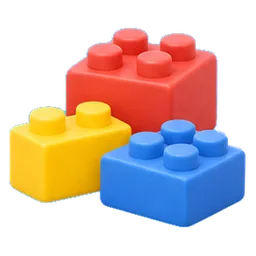
Copy my tower
Spatial thinking
Build a small block tower behind a book, then show it for five seconds. Can they build the same one?
Ages 4–8
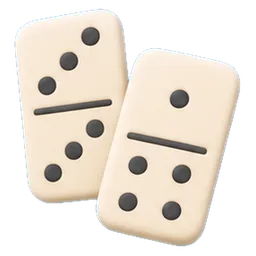
Pattern trains
Patterns
Make a row of objects in a pattern (spoon, fork, spoon, fork) and ask what comes next.
Ages 3–6
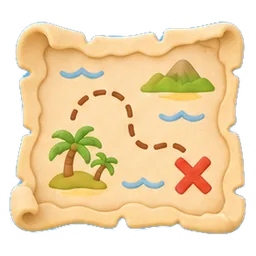
Treasure clues
Following steps
Hide a toy and give two-step clues: “Go to the sofa, then look under the blue pillow.”
Ages 4–8
Logic puzzles in Cleoland
Puzzles that start tiny and grow with your child
Cleoland’s puzzles are made by code and checked, so every one can be solved, with no scores or timers. At 2–3 they are tiny; at 8+ they take real planning.
Where 2- and 3-year-olds start
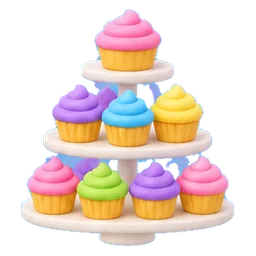
Cake Tower
Build the birthday cake on the star stand, one layer at a time, never a big layer on a small one.
Ages 2–32 layers
Jar Sort
Move one piece at a time until each jar holds one color, then one kind of thing.
Ages 2–32 colors
Animal Match
Tap two tiles that go together to clear them, and Cleo says what the pair teaches.
Ages 2–34 pairs of the same animal

Color the Map
Paint the fields so no two that touch share a color.
Ages 2–33 fields, 2 paints

Suns & Clouds
Finish the pattern; from 6, fill a grid of suns and clouds with no three the same in a row.
Ages 2–3Finish a sun, cloud pattern

Garden Beds
Drag to split the garden into beds. Each sign’s number is its bed’s size, and the plant grows when it’s right.
Ages 2–33×3 garden
Where kids 8 and up get to
Cake Tower
Build the birthday cake on the star stand, one layer at a time, never a big layer on a small one.
Ages 8+5 layers
Jar Sort
Move one piece at a time until each jar holds one color, then one kind of thing.
Ages 8+5 kinds

Untangle
Drag the pegs until no yarn crosses.
Ages 8+10–12 pegs

Sunbeam
Turn the mirrors so the flashlight’s beam reaches the hidden tile, and see who was hiding.
Ages 8+5–6 mirrors
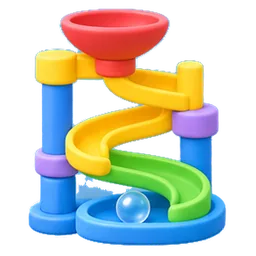
Marble Run
Turn the track tiles so it rolls home: the egg to its nest, the ball to the goal.
Ages 8+6–9 tiles to turn
Suns & Clouds
Finish the pattern; from 6, fill a grid of suns and clouds with no three the same in a row.
Ages 8+6×6 grids, both rules
Cake Tower is the classic Tower of Hanoi, with cake layers: build the cake on the star stand, one layer at a time, never a big layer on a small one. At 2–3 it’s two layers; at 8+ it’s five, and a whole five-layer cake takes at least 31 moves.
 Try it with Cleo
Puzzles about the things your child loves
A child who loves dinosaurs rolls a dinosaur egg home to its nest, finishes T. rex patterns and colors the dinosaur valley. Every puzzle grows with them, from tiny at 2–3 to real planning at 8+.

Questions about logic games
What are good logic games for preschoolers?+
Short, visual ones: finding the odd one out, finishing a pattern, sorting by color and size, simple mazes, and memory games like pairs or What’s missing? For 3- and 4-year-olds, two or three choices at a time is plenty.
At what age can kids do logic puzzles?+
From about 3, with very simple ones: a two-ring Tower of Hanoi, sorting two colors, or matching shapes. By 5 to 6 most children can plan a few steps ahead, and by 7 to 8 they enjoy puzzles with rules, like grids that must balance.
Are brain teasers good for kindergarteners?+
Yes, if they’re short and the answer can be found by thinking, not by knowing a trick. Read the question, give them time, and ask how they worked it out. The explaining is where the learning happens.
What are memory games for kindergarteners?+
Pairs, What’s missing?, I went to the market, and copying a clap pattern are all easy to play anywhere. Start small and add one more thing each time your child gets it right.
How do I make a puzzle easier or harder?+
Change one thing: fewer pieces, fewer colors or fewer steps makes it easier; more of any of them makes it harder. In Cleoland every puzzle does exactly this by age, from 2–3 to 8+.
Keep reading
 Ages 3–4
Games
Games for preschoolers: learning games for ages 3 and 4
Simple games for colors, counting, letters and listening that need nothing but you, plus the games Cleo plays at 2–3.
 Ages 5–6
Games
Games for kindergarteners: learning games to play at home
No-prep games for letters, numbers, thinking and listening, plus what kindergarteners are learning this year.

 Ages 5–6
Math
Math games for kindergarten: counting, adding and shapes
Quick math games with things you already have at home, matched to what kindergarten math covers.