

Preschool games
Games for preschoolers: learning games for ages 3 and 4
The best games for preschoolers have one simple idea and a grown-up to play with: hunt for colors, count snacks, guess the animal sound, freeze when the music stops. Here are 16 that need no prep, plus the games Cleo plays at 2–3, themed on what your child loves.
 Ages 3–4
Updated November 2026 · For ages 3–4 · By the Cleoland team

Games for preschoolers
Color and shape games
Color hunt
Colors
“Find three red things!” Your child races around the room to bring them back.
Make it harder: find something red and round.
Ages 3–4
Shape sort
Shapes
Sort blocks, lids and cookies into circles, squares and triangles.
Make it harder: name a shape you see on a walk.
Ages 3–4

Rainbow line
Colors and order
Line up toys in rainbow order: red, orange, yellow, green, blue, purple.
Make it harder: start from purple and go backwards.
Ages 3–4
Match the pair
Matching
Mix up socks or shoes and find the pairs.
Make it harder: do it with your eyes closed, by touch.
Ages 3–4
Games for preschoolers
Counting games
Count the steps
Counting out loud
Count every step on the stairs or every hop across the room.
Make it harder: count backwards on the way down.
Ages 3–4
How many?
Counting things
Put up to five snacks on a plate. Touch each one as you count, then ask “How many?”
Make it harder: go up to ten.
Ages 3–4
Toss and count
Counting and aiming
Toss soft toys into a basket. Count how many went in.
Make it harder: which has more: in or out?
Ages 3–4
Dot match
Seeing numbers
Roll a die and find that many things, like three spoons or four cars.
Make it harder: roll and say the number without counting.
Ages 3–4
Games for preschoolers
Sound and letter games
Who says that?
Listening
Make an animal sound and your child names the animal. Then swap.
Make it harder: make the sound quietly or very fast.
Ages 3–4

I spy a color
Describing
“I spy something blue.” Older 4-year-olds can try first sounds: “something that starts with /b/.”
Make it harder: add a second clue: blue and soft.
Ages 3–4

Name letters
Letters
Show the first letter of your child’s name and hunt for it on books, signs and boxes.
Make it harder: find every letter of their name.
Ages 3–4

Finish the rhyme
Rhyming
Sing a nursery rhyme and stop before the last word for your child to finish it.
Make it harder: make up a silly new rhyming word.
Ages 3–4
Games for preschoolers
Listening and moving games

Freeze dance
Listening and self-control
Dance while the music plays and freeze when it stops.
Make it harder: freeze in a shape you call out.
Ages 3–4
Animal walks
Following directions
Hop like a frog, waddle like a penguin, stomp like a dinosaur across the room.
Make it harder: call out two animals in a row.
Ages 3–4

What’s missing?
Memory
Put three toys in a row. Your child closes their eyes while you hide one. Which one is gone?
Make it harder: use five toys.
Ages 3–4
Teddy says
Listening
A gentle Simon says: do the action only when “Teddy says.”
Make it harder: speed it up.
Ages 3–4
Preschool learning games in Cleoland
Cleo’s games at 2–3, themed on what your child loves
At 2–3, Cleoland’s games are pictures, and Cleo says every word, so a child can play without reading. A child who loves dinosaurs gets dinosaur rounds.
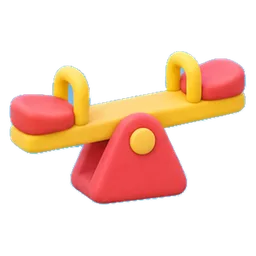
Which Is More?
Tap the side of the seesaw that is more. It tips, both amounts show, and Cleo says the fact.
Ages 2–3Bigger, taller or more legs, in pictures

Order It
Put the cards in order, hottest to coldest or biggest to smallest. A wrong place bounces back and Cleo asks a question that helps.
Ages 2–33 things of very different sizes
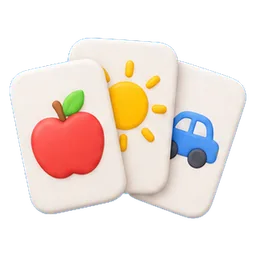
Spanish Pairs
Match each thing to its Spanish word, and Cleo says it in a Spanish voice. (In Cleo’s other languages it teaches English.)
Ages 2–33 pairs: a picture and its word
I Spy
Cleo spies something with a clue: “something that lives in the sea!” Only one thing fits, and she says why.
Ages 2–34 things: sounds, colors, kinds
Paint Mixer
Real color learning with Cleo’s paint pots: the colors of things, what two colors make, tints and shades.
Ages 2–3What color is the banana?
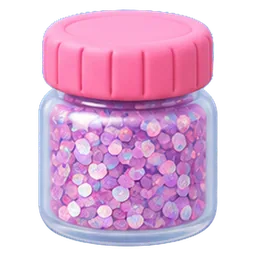
Jar Sort
Move one piece at a time until each jar holds one color, then one kind of thing.
Ages 2–32 colors
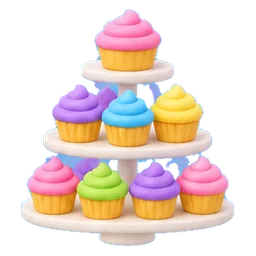
Cake Tower
Build the birthday cake on the star stand, one layer at a time, never a big layer on a small one.
Ages 2–32 layers
Animal Match
Tap two tiles that go together to clear them, and Cleo says what the pair teaches.
Ages 2–34 pairs of the same animal
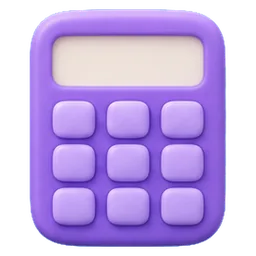
Broken Calculator
Some keys are broken. Make the number another way, then press = to check.
Ages 2–3Count 1 to 5 things
Try it with Cleo
Games about whatever your preschooler loves
Your child says “unicorns” or “fire trucks,” and Cleo’s world changes around them. The games, songs and stories follow.

Questions about preschool games
What are good games for preschoolers?+
Simple games with one clear idea: hunting for colors, sorting shapes, counting snacks, guessing animal sounds, freeze dance and What’s missing? Three- and four-year-olds learn most from short games played with a grown-up.
What are pre-K games?+
Games for 4-year-olds in the year before kindergarten: counting to ten and beyond, recognizing letters (especially in their name), hearing rhymes and first sounds, sorting and simple patterns.
Are there free preschool learning games?+
Yes. Every game on this page is free and needs nothing but you. For apps, PBS KIDS Games and Khan Academy Kids are free; Cleoland is free for 7 days, then a yearly plan.
How much screen time is OK for a preschooler?+
The World Health Organization says children aged 3 and 4 should have no more than one hour of sedentary screen time a day, and less is better. The American Academy of Pediatrics also suggests about an hour of high-quality programming for ages 2 to 5, shared with a parent when possible.
What should a preschool learning game teach?+
At 3 and 4: colors, shapes, counting small groups, matching, sorting, first sounds and rhymes, listening and taking turns. Pick one skill at a time and keep it playful.
Keep reading
 Ages 4
Ages
Games for 4-year-olds: what they’re learning and what to play
What most 4-year-olds can do (from the CDC), the games that fit this age, and what to look for in an app.
 Ages 2–8+
Thinking
Logic games for preschoolers: brain teasers, puzzles and memory games
Brain teasers with answers, memory games to play anywhere, and puzzles that grow with your child.
 Ages 3–5
Apps
Preschool learning apps: an honest guide for parents
What makes a good learning app for ages 3–5, screen-time guidance, and the apps families ask about most.