

Lessons
Lessons for curious kids: ask about anything
Volcanoes, sharks, planets, why leaves fall. Cleo explains it simply, with pictures from her world and real facts.

What your child practices
How the world works, starting from their question
Animals and nature
Dinosaurs, sea creatures, bugs and the jungle, with real sizes and facts.
Space and science
Planets, volcanoes, weather and how things work.

Places and people
Cities, countries and how children live around the world.
How it works
Say it. Cleo makes it.
- 1

Your child asks
“How big was a T-rex?” “Why is the sea salty?”
- 2

Cleo explains
Short and clear, at your child’s age, with pictures from her world.
- 3
Games full of facts too
Games like Which Is More? and I Spy are built on real, checked facts: which is bigger, which is faster.
At every age
What a lesson is like at each age
Every lesson follows the age you set in the app, and every one ends with something to do and a question to answer.
- Ages 2–3
One simple idea
About 45 words in words they already know, then one thing to do or look for right now, and one easy question.
- Ages 4–5
About three facts
Each with an everyday example, something small to try or spot, and a question they can answer.
- Ages 6–7
About five facts, and why
Facts and the reasons behind them, a new word explained, something to try or notice, and a question that makes them think.
- Ages 8+
Six to eight facts
Real numbers and surprising connections, a small experiment or observation, and a question to think about.
Examples
Dinosaurs for kids, space for kids, and whatever comes next

How big were the biggest dinosaurs?
Longer than three school buses.

Why does Saturn have rings?
Ice and rock, going round and round.
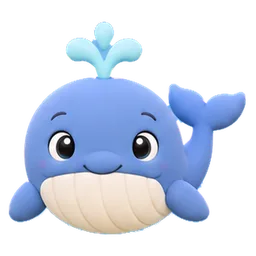
How do whales breathe?
Through a blowhole on top of their head.
Examples of the kinds of questions children ask. In the app, every lesson starts from your child’s own question.
Ideas to try
Questions your child can ask
Anything they wonder about. A few to get started.
- “Why is the sky blue?”
- “How do bees make honey?”
- “Where does rain come from?”
- “What’s inside a volcano?”
- “How do fish breathe underwater?”
- “Why does the moon change shape?”
- “How do airplanes stay up?”
- “What do astronauts eat?”
- “Why do leaves change color?”
For grown-ups
Getting more from every lesson
Curiosity grows when questions lead to more questions. A few ways to help.
Ask the next question
Every answer leads to another question. Let your child ask Cleo the next one.
Try the thing together
Each lesson ends with something to do, look for or try. Do it together, right then.

Let them teach you
After a lesson, ask your child to explain it back to you in their own words.
Spot it in real life
Point it out when you see it: rain on the window, a bee in the garden, the moon tonight.
Lessons: guides for parents
Questions parents ask
What ages are the lessons for?+
Children 2–8+. Cleo explains at your child’s age, which you set when you start and can change in Settings.
Where do the facts come from?+
Lessons are written facts first, in words for your child’s age. The games use Cleo’s own lists of checked facts.
What can my child ask about?+
Anything: dinosaurs, space, animals, the sea, volcanoes, the weather, how things work. Cleo explains it simply, with pictures from her world.
How long is a lesson?+
Short. About 45 words at 2–3, and about 180, 280 and 400 words at 4–5, 6–7 and 8+.
Can lessons be in other languages?+
Yes, in any of Cleo’s 9 languages: pick one with the button next to the mic.
Is Cleoland good for science for kids?+
Lessons cover animals, nature, space and how things work, short and clear, and games like Which Is More? and I Spy practice real facts too.
More to do with Cleo

Games
20 games that grow with your child, themed on the things they love.
Practices logic, numbers, letters and facts →

Stories
Stories starring whatever your child dreams up, at your child’s age.
Practices new words and feelings →


Songs
Upbeat sing-along songs about anything, with rhymes and a chorus to join.
Practices rhymes, rhythm and new words →


Talk
Cleo listens, answers and remembers what your child loves.
Practices speaking, listening and asking questions →

Every question is a lesson
Cleo explains it, short and clear, at your child’s age.