

Kindergarten games
Games for kindergarteners to play at home
The best games for 5- and 6-year-olds are short, playful and practise kindergarten skills: letter sounds, rhyming, counting, adding within 10, shapes, patterns and listening. Here are 16 no-prep games grouped by skill, plus the games Cleo makes from what your child loves.
 Ages 5–6
Updated November 2026 · For ages 5–6 · By the Cleoland team

This year
What kindergarteners are learning
Most US kindergartens follow standards like the Common Core. In plain words, this is what your child is working on, and what the games below practice.
Reading
Letter names and the sound each letter makes, rhyming words, blending sounds into short words, and reading common words like the, you and is.
Math
Counting to 100 by ones and tens, counting groups of up to 20 things, comparing numbers, and adding and taking away within 10.

Shapes and patterns
Naming flat and solid shapes, describing where things are (above, beside, behind), and spotting and continuing patterns.

Talking and listening
Retelling a story, asking and answering questions, following two-step directions and taking turns in a game.
Games for kindergarteners
Letter and reading games

I spy a sound
First sounds
“I spy something that starts with /b/.” Use the letter’s sound, not its name. Then let your child be the spy.
Make it harder: spy the last sound instead: “something that ends in /t/.”
Ages 5–6

Rhyme toss
Rhyming
Say a word and toss a ball. Your child catches it and says a word that rhymes: cat, hat, bat. Silly made-up words count too.
Make it harder: see how long the rhyme chain can go.
Ages 5–6
Robot talk
Blending sounds
Talk like a robot, one sound at a time: “Get your h-a-t.” Your child blends the sounds into the word and fetches it.
Make it harder: switch roles so they split words into sounds.
Ages 5–6

Name hunt
Letters
Find something at home that starts with each letter of your child’s name.
Make it harder: use a grown-up’s name or a pet’s name.
Ages 5–6
Games for kindergarteners
Math and counting games
Dice towers
Counting
Roll a die, count the dots, and add that many blocks to a tower. First tower to 20 wins.
Make it harder: roll two dice and add them.
Ages 5–6

Snack maths
Adding and taking away
“You have 5 grapes. You eat 2. How many are left?” Let them check by counting.
Make it harder: start with 10 and take away more.
Ages 5–6

Number line hop
Counting on
Chalk or tape numbers 1 to 20 on the floor. “Start at 4, hop 3. Where are you?”
Make it harder: hop backwards to take away.
Ages 5–6
Shape hunt
Shapes
Find three circles, three rectangles and three triangles around the house or on a walk.
Make it harder: look for cubes, cylinders and spheres.
Ages 5–6
Games for kindergarteners
Thinking and memory games

Pattern dance
Patterns
Clap, clap, stomp. Clap, clap, stomp. Your child keeps the pattern going, then makes one up for you.
Make it harder: make a pattern with three different moves.
Ages 5–6

Sock sort
Sorting and matching
Tip out the clean socks and match the pairs, then sort them by color or by whose they are.
Make it harder: sort by two rules at once.
Ages 5–6

Twenty questions
Reasoning and words
Think of an animal. Your child asks yes-or-no questions to guess it: “Does it live in the sea?”
Make it harder: count the questions and try to guess in fewer.
Ages 5–6

Odd one out
Classifying
Name four things where one doesn’t belong: apple, banana, carrot, grape. Which one, and why?
Make it harder: accept any answer they can explain.
Ages 5–6
Games for kindergarteners
Listening and talking games

Simon says
Listening and self-control
Do the action only when you hear “Simon says.” Great for following directions.
Make it harder: give two actions at once.
Ages 5–6
Red light, green light
Stopping and starting
Move on “green light,” freeze on “red light.” Add “yellow light” for slow motion.
Make it harder: swap the meanings: red means go.
Ages 5–6

Story chain
Telling a story
Take turns adding one sentence to a story: “Once upon a time a dragon lost its shoe…”
Make it harder: every sentence must start with a different word.
Ages 5–6

Describe it
Describing words
Hide a toy in a bag. Describe it without saying its name until your child guesses.
Make it harder: they describe, you guess.
Ages 5–6
Learning games in Cleoland
Kindergarten games themed on what your child loves
Every game in Cleoland plays at your child’s age. Kindergarteners play at 4–5 or 6–7, and you can change the age any time in Settings. About half the rounds are about what your child loves.
Letter Blocks
Unscramble the letter blocks to spell the word. Cleo gives the clue: “Five letters. A fruit.”
Ages 4–5Short words, with their picture
Word Tiles
A crossword board game without points: make a word that crosses Cleo’s, and she plays one back.
Ages 4–5One 3-letter word on a 5×5 board
Spanish Pairs
Match each thing to its Spanish word, and Cleo says it in a Spanish voice. (In Cleo’s other languages it teaches English.)
Ages 4–54 pairs
Broken Calculator
Some keys are broken. Make the number another way, then press = to check.
Ages 4–5Make up to 10 with +
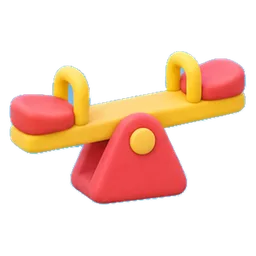
Which Is More?
Tap the side of the seesaw that is more. It tips, both amounts show, and Cleo says the fact.
Ages 4–5Counting legs, wings and wheels

Order It
Put the cards in order, hottest to coldest or biggest to smallest. A wrong place bounces back and Cleo asks a question that helps.
Ages 4–53–4 things: legs, wheels, seasons
I Spy
Cleo spies something with a clue: “something that lives in the sea!” Only one thing fits, and she says why.
Ages 4–58 things: kinds and homes
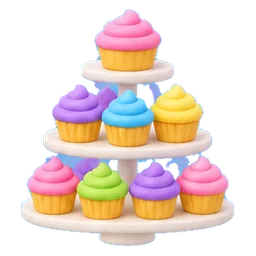
Cake Tower
Build the birthday cake on the star stand, one layer at a time, never a big layer on a small one.
Ages 4–53 layers

Jar Sort
Move one piece at a time until each jar holds one color, then one kind of thing.
Ages 4–53 kinds: sea animals, fruit…
 Try it with Cleo
“I love trucks!” Then the games fill up with trucks.
Unscramble T-R-U-C-K, weigh a big truck against a car, race a bullet train against a jet plane. The games are themed on what your child loves, at their age.

Online games for kindergarten
What to look for in online learning games
A good online game for a kindergartener teaches through the game itself, and keeps you in the loop.
✓ Reads instructions out loud
Most 5-year-olds can’t read directions yet.
✓ Short levels that adapt
Too easy is boring; too hard ends in tears. Good games adjust.
✓ No ads, no surprise purchases
Look for “no ads” and no in-app purchases inside the child’s area.
✓ Teaches, not just rewards
Stars and stickers are fine, but the game itself should involve reading, counting or thinking.
✓ A view for you
A way to see what your child played and practised.
Questions about kindergarten games
What games are good for kindergarteners?+
Short games that practice a kindergarten skill while feeling like play: I spy with letter sounds, rhyming games, dice and counting games, shape hunts, pattern games, Simon says and story chains. Five to ten minutes, a few times a day, is plenty.
What are some educational games for kindergarten?+
Games where the learning is the game itself: blending sounds to find a hidden object, counting dots to build a tower, sorting by color and size, or comparing which group has more. The ones on this page need nothing but you and things at home.
Are online games good for kindergarteners?+
They can be, in small doses. Look for games that read instructions out loud, adjust their level, have no ads or in-app purchases, and actually involve reading, counting or thinking. Play alongside your child when you can.
How much screen time is OK for a kindergartener?+
For children 2 to 5, the American Academy of Pediatrics suggests about one hour a day of high-quality programming, ideally watched or played together. From 6 on, it recommends consistent limits that protect sleep, play, reading and family time.
What do kids learn in kindergarten?+
In most US schools: letter sounds and rhyming, reading simple and common words, counting to 100, adding and taking away within 10, naming shapes, and listening, taking turns and retelling stories.
Keep reading
 Ages 5–6
Math
Math games for kindergarten: counting, adding and shapes
Quick math games with things you already have at home, matched to what kindergarten math covers.
 Ages 4–8
Reading
Sight words by grade, and how to teach them
The Dolch lists for pre-K to second grade, a 5-minute daily routine, and games that make sight words stick.
 Ages 2–8+
Thinking
Logic games for preschoolers: brain teasers, puzzles and memory games
Brain teasers with answers, memory games to play anywhere, and puzzles that grow with your child.