Cleoland

Color mixing

What colors make green, purple, orange and brown? Color mixing for kids

Blue and yellow make green. Red and blue make purple. Red and yellow make orange. All three together make brown. Below are a one-line answer and a picture for every color children ask about, a full color mixing chart, warm and cool colors, and five mixing experiments.

Start your 7-day free trial

7 days free, then $69.99 a year. Cancel anytime.

4.9 on the App Store

Updated November 2026 · For ages 3–8 · By the Cleoland team

Cleo

Blue + yellow

What colors make green?

Blue and yellow make green.

Blue+Yellow=Green
  • More yellow: yellow-green, like a lime
  • More blue: blue-green, like teal
  • Add white: mint green
  • Add a dot of black: dark forest green
  • Start with yellow and add blue a little at a time. Blue is the darker paint, so a small dab changes yellow quickly.
  • A touch of red dulls green into olive.
  • In a printer, cyan and yellow ink make green. On a screen, green is not mixed at all: it is one of the three colors of light that screens start with.

Red + blue

What two colors make purple?

Red and blue make purple.

Red+Blue=Purple
  • More blue: blue-purple, like violet
  • More red: red-purple, like plum
  • Add white: lavender
  • Add a dot of black: dark purple
  • For a bright purple, use a red that leans pink and a blue that leans purple.
  • If your purple looks brown or gray, your red leans orange or your blue leans green. Both carry a little yellow, and yellow is purple’s opposite.
  • Purple paint is often dark in the pot. Add a little white to see its true color.

Red + yellow

What colors make orange?

Red and yellow make orange.

Red+Yellow=Orange
  • More yellow: yellow-orange, like a mango
  • More red: red-orange, like a tomato
  • Add white: peach
  • Add a little blue: burnt orange
  • Start with yellow and add red a little at a time.
  • Red is the stronger paint, so you will usually need more yellow than red.

Red + yellow + blue

What colors make brown?

Red, yellow and blue together make brown. The easy way: mix orange, then add blue a little at a time.

Red+Yellow+Blue
=Brown
  • More red: red-brown, like a brick
  • More yellow: golden brown
  • More blue: dark brown
  • Add white: tan
  • Any color mixed with its opposite makes brown too: red and green, blue and orange, or yellow and purple.
  • This is why a painting turns muddy when every color runs together. All three primaries have met.

Red + white

What colors make pink?

Red and white make pink.

Red+White=Pink
  • More red: rose
  • Add a dab of yellow: coral
  • Add a dab of blue: a cooler, orchid pink
  • Start with white and add red in tiny dabs. A little red colors a lot of white.
  • With watercolors there is no white paint to add. Use more water, and the white paper does the job.

Black + white

What colors make gray?

Black and white make gray.

Black+White=Gray
  • Add a touch of blue: cool gray
  • Add a touch of orange: warm gray
  • More black: charcoal gray
  • Start with white and add black a tiny bit at a time.
  • No black paint? Mix two opposites, like blue and orange, then add white for a soft gray.

Blue + green

What colors make teal?

Blue and green make teal.

Blue+Green=Teal
  • Add white: turquoise
  • More green: sea green
  • Add a dot of black: deep teal
  • No green paint? Mix blue with a small amount of yellow.
  • Teal is the darker one; turquoise is teal with white in it.

All three, dark

What colors make black?

Red, yellow and blue mixed in strong, equal amounts make a brown so dark it is almost black. Blue and brown get even closer.

Red+Yellow+Blue
=Almost black
  • Blue + brown: almost black
  • Add white: gray
  • A mixed black is softer than black from the tube, which is handy for shadows.
  • Printers mix cyan, magenta and yellow ink, and carry a black ink as well.

The colors you start with

What colors make red, blue, yellow and white?

In a paint box, none. Red, yellow and blue are the primary colors: other paints cannot make them, and no paints mix to make white. Ink and light work differently.

  • Red

    With printer inks, magenta and yellow make red.

    Magenta+Yellow=Red
  • Blue

    With printer inks, cyan and magenta make blue.

    Cyan+Magenta=Blue
  • Yellow

    No paints or inks mix to make yellow. With light, red and green together look yellow.

    Red light+Green light=Yellow
  • White

    No paints make white. With light, red, green and blue together make white.

    Red light+Green light+Blue light
    =White

More colors

What colors make turquoise, peach, lavender and more?

Twelve more colors children ask about. “A little” means a small dab: add it slowly and stop when it looks right.

  • Turquoise

    Blue+Green+White
    =Turquoise
  • Lime green

    Yellow+A little blue=Lime green
  • Peach

    Orange+White=Peach
  • Lavender

    Purple+White=Lavender
  • Coral

    Pink+A little orange=Coral
  • Maroon

    Red+A dot of black=Maroon
  • Navy blue

    Blue+A dot of black=Navy blue
  • Olive green

    Yellow+A dot of black=Olive green
  • Tan

    Brown+White=Tan
  • Gold

    Yellow+A little brown=Gold
  • Sky blue

    Blue+White=Sky blue
  • Magenta

    Red+A little purple=Close to magenta

The whole picture

Color mixing chart

Every pair you can make from eight pots of paint: red, yellow, blue, orange, green, purple, white and black. That is 28 mixes. Real paints vary, so treat the swatches as a guide and test on scrap paper first.

Tap two paint pots

First pot+Second pot=?

Tap a paint pot to start.

Two primary colors make a secondary color

Red, yellow and blue are the primary colors in a paint box. Any two of them make orange, green or purple.

  • Red+Yellow=Orange
  • Yellow+Blue=Green
  • Red+Blue=Purple

A primary color and the color next to it

Mix a primary with the secondary color beside it on the color wheel and you get the color in between.

  • Red+Orange=Red-orange
  • Yellow+Orange=Yellow-orange
  • Yellow+Green=Yellow-green
  • Blue+Green=Blue-green
  • Blue+Purple=Blue-purple
  • Red+Purple=Red-purple

Opposite colors make browns

Colors that sit across from each other on the color wheel are called complementary colors. Each pair has red, yellow and blue in it, so the mix turns brown.

  • Red+Green=Red-brown
  • Blue+Orange=Dark brown
  • Yellow+Purple=Golden brown

Two secondary colors make soft, earthy colors

Orange, green and purple each hold two primaries, so any two of them hold all three.

  • Orange+Green=Olive brown
  • Orange+Purple=Rusty brown
  • Green+Purple=Slate gray

Add white to make a tint

White makes any color lighter and softer.

  • Red+White=Pink
  • Yellow+White=Pale yellow
  • Blue+White=Light blue
  • Orange+White=Peach
  • Green+White=Mint green
  • Purple+White=Lavender
  • Black+White=Gray

Add black to make a shade

Black makes any color darker. Use a tiny dot at a time: black is strong.

  • Red+Black=Maroon
  • Yellow+Black=Olive green
  • Blue+Black=Navy blue
  • Orange+Black=Brown
  • Green+Black=Dark green
  • Purple+Black=Dark purple

The color wheel, laid out in a row

Twelve colors in order. Bend the row into a circle and yellow-green meets yellow again. Neighbors mix into bright colors; colors six steps apart are opposites and mix into brown.

YellowYellow-orangeOrangeRed-orangeRedRed-purplePurpleBlue-purpleBlueBlue-greenGreenYellow-green

The science

Why paint and light mix differently

Paint takes light away, and lights add together. Mix more paints and the color gets darker. Shine more colored lights on the same spot and it gets brighter.

Paint and ink take light away

White light has every color in it. A paint looks yellow because it soaks up the blue part of the light and bounces the rest back to your eyes. Cyan soaks up red, and magenta soaks up green. Mix two paints and each soaks up its share, so you see only what both let through. Yellow lets red and green through. Cyan, the greenish blue of printer ink, lets green and blue through. Green is the only part both let through, which is why yellow and blue make green.

Cyan+Yellow=Green
Magenta+Yellow=Red
Cyan+Magenta=Blue
Cyan+Magenta+Yellow
=Black

Lights add together

A screen starts out black and adds light. Its three starting colors are red, green and blue. Red and green light together look yellow, green and blue look cyan, red and blue look magenta, and all three together look white.

Red light+Green light=Yellow
Green light+Blue light=Cyan
Red light+Blue light=Magenta
Red light+Green light+Blue light
=White
WhereStarting colorsAll three togetherWhy
Paint at schoolRed, yellow, blueA dark brown, close to blackEach paint soaks up some of the light. More paints, less light.
Printer inkCyan, magenta, yellow (plus black)BlackThe same idea as paint: each ink soaks up one part of the light.
Screens and stage lightsRed, green, blueWhiteLights add together. More lights, more light.

So which primary colors are “right”? All three sets are. Red, yellow and blue are what children learn with paint, and they work well for mixing in a paint box. Cyan, magenta and yellow are the inks color printers use. Red, green and blue are the lights inside a screen.

Lighter, darker, softer

Tints, shades and tones

A tint is a color with white added. A shade is a color with black added. A tone is a color with gray added.

  • Tint

    A color plus white. Pink is a tint of red.

    Blue+ a little white+ more white+ lots of white
  • Shade

    A color plus black. Navy is a shade of blue.

    Blue+ a dot of black+ more black+ lots of black
  • Tone

    A color plus gray. Tones look softer and dustier.

    Blue+ a little gray+ more gray+ lots of gray

Color families

Warm and cool colors

Warm colors are reds, oranges and yellows, the colors of fire and sunshine. Cool colors are blues, greens and purples, the colors of water, ice and shade.

Warm colors

RedRed-orangeOrangeYellow-orangeYellow

Think of a campfire, a sunset, autumn leaves. Artists use warm colors to make a picture feel sunny and lively.

Cool colors

GreenBlue-greenBlueBlue-purplePurple

Think of the sea, a snowy morning, a shady forest. Artists use cool colors to make a picture feel calm or chilly.

Yellow-greenRed-purple

In between: yellow-green and red-purple sit where the two families meet, so they can feel warm or cool depending on what is next to them. Every color also has warmer and cooler versions: a red that leans orange is warmer than a red that leans purple. To try it, sort a box of crayons into a warm pile and a cool pile, then paint a warm sun over a cool sea.

Try it

Five color mixing experiments for kids

Each one starts with a guess: “What do you think these two will make?” Use washable paint, food coloring or play dough, and cover the table first.

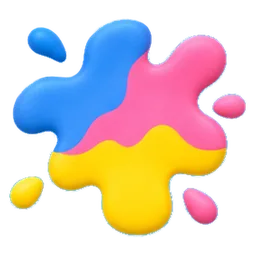
  • Three-paint rainbow

    Paint

    Put out only red, yellow and blue paint, and ask for a rainbow with six colors. Your child has to make the orange, green and purple.

    Make it harder: add white and paint a second, pale rainbow underneath.

    Ages 3–8

  • Walking water

    Food coloring

    Stand six clear cups in a circle. Half-fill every other cup with water and color them red, yellow and blue. Bridge each cup to the next with a folded strip of paper towel, and watch over the next hour or two as the water climbs into the empty cups and mixes.

    Make it harder: guess each new color before it appears, and write the guesses down.

    Ages 4–8

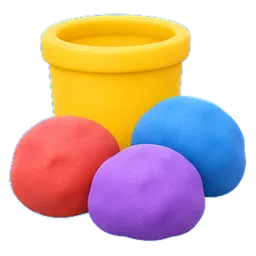
  • Play dough squish

    Play dough

    Roll a small ball of two colors. Guess what they will make, then squish and knead until the streaks are gone. Line up the new balls as a color family.

    Make it harder: use a big ball of yellow with a tiny ball of blue, then swap. How does the green change?

    Ages 2–8

  • Tint and shade ladder

    Paint

    Paint a stripe of one color. Add a little white and paint the next stripe, five times over. Start again and add a tiny dot of black each time.

    Make it harder: give every stripe a name, like a paint shop: “ocean at night,” “blueberry milk.”

    Ages 5–8

  • Brown three ways

    Paint

    On three plates, mix red with green, blue with orange, and yellow with purple. Are the three browns the same? Which one looks warmest?

    Make it harder: add white to each brown and compare the tans.

    Ages 5–8

Colors with Cleo

Paint Mixer in Cleoland, at each age

Paint Mixer is one of Cleoland’s games. It plays at the age you set in the app, from naming colors to the color wheel.

Paint Mixer

Real color learning with Cleo’s paint pots: the colors of things, what two colors make, tints and shades.

  1. Ages 2–3What color is the banana?
  2. Ages 4–5Mixing: red and yellow make…?
  3. Ages 6–7Tints, shades, warm and cool
  4. Ages 8+Three-color mixes, the color wheel

Two more games with colors in them

  • Jar Sort

    Move one piece at a time until each jar holds one color, then one kind of thing.

    Ages 4–53 kinds: sea animals, fruit…

  • Color the Map

    Paint the fields so no two that touch share a color.

    Ages 4–55 fields, 3 paints

Try it with Cleo

“Red and yellow make…?” Cleo’s paint pots know.

Paint Mixer starts with “What color is the banana?” at 2–3, moves on to mixing at 4–5, and reaches three-color mixes and the color wheel at 8 and up.

Start your 7-day free trial

7 days free, then $69.99 a year. Cancel anytime.

4.9 on the App Store

Questions about mixing colors

What colors make green?+

Blue and yellow make green. More yellow gives a lime green, more blue gives teal, white makes mint and a dot of black makes forest green. On a screen, green is one of the three starting colors of light and is not mixed.

What two colors make purple?+

Red and blue make purple. For a bright purple, use a red that leans pink and a blue that leans purple; a red that leans orange gives a dull, brownish purple. Add white for lavender.

What is a color mixing chart?+

A chart that shows which two colors make which new color. The one on this page shows all 28 pairs you can make from red, yellow, blue, orange, green, purple, white and black.

What are warm and cool colors?+

Warm colors are reds, oranges and yellows, the colors of fire and sunshine. Cool colors are blues, greens and purples, the colors of water, ice and shade. Yellow-green and red-purple sit in between.

What are the primary colors?+

In a paint box, red, yellow and blue: the colors you start with, which other paints cannot make. Printers use cyan, magenta and yellow ink instead, and screens use red, green and blue light.

Why do my paints turn brown when I mix them?+

Because red, yellow and blue have all ended up in the mix. That happens when you mix all three, or when you mix a color with its opposite, such as red and green. To keep colors bright, mix only two primaries at a time and rinse the brush in between.

What happens when you mix all the colors together?+

With paint you get a dark brown that is close to black, because every paint soaks up some of the light. With colored light it is the other way around: red, green and blue light together make white.

Keep reading

Cleoland is an app for phones and tablets

Scan to start your free week

Point your phone’s camera at the code. It opens the App Store on iPhone and iPad, or Google Play on Android.

7 days free, then $69.99 a year. Cancel anytime.

QR code to get Cleoland