

Preschool math
Counting, sorting, pattern and shape activities for preschoolers
The best counting activities for preschoolers use real things: count forks onto the table, sort the socks by color, make a spoon-and-fork pattern, hunt for triangles. Here are 38 no-prep activities for ages 3 to 5, grouped by skill, with what each one teaches.
 Ages 3–5
Updated November 2026 · For ages 3–5 · By the Cleoland team
Counting
Counting activities for preschool
Saying “one, two, three” is the easy part. Counting means giving each thing exactly one number, and knowing that the last number you say is how many there are. These six activities practice both, with things you already have.
Move it to count it
One number for each thing
Line up five toy cars behind a strip of tape. Your child slides each car across the tape as they say its number, so nothing gets counted twice and nothing gets skipped.
Make it harder: scatter the cars instead of lining them up.
Ages 3–4
Set the table
Counting out an amount
“We need four forks.” Your child counts four out of the drawer and puts one at each place. Counting out a number you ask for is harder than counting what is already there.
Make it harder: “Grandma is coming too. How many forks now?”
Ages 3–5
So how many?
The last number is the answer
Count the eggs in the carton together, then ask, “So how many eggs?” If your child starts counting again, sweep a hand over all of them and say, “Six. There are six eggs.”
Make it harder: cover them up and ask again a minute later.
Ages 3–4

Pocket count
Counting real collections
On a walk, collect a few pebbles, leaves or acorns. At home, tip them out, put each kind in a row and count the rows.
Make it harder: which row is longest? Count to check.
Ages 3–5
Count the claps
Counting what you can’t see
Your child closes their eyes. Clap, or tap a pot, three times. How many was that? Then they clap a number for you to count.
Make it harder: clap slowly, then fast, then with a pause in the middle.
Ages 4–5

Blast-off countdown
Counting backward
Crouch down small. Count backward from five together, then jump up at “blast off!” Use it for getting out of the bath or into the car.
Make it harder: count down from ten.
Ages 3–5
Numbers
Number games for preschoolers
Number games go one step past counting: knowing a written 4 when you see it, seeing three things at a glance, putting numbers in order, and finding out that the next number is always one more.

Number hunt
Knowing written numbers
Pick a number of the day, say 3. Hunt for it on house numbers, clocks, the remote, the microwave and price tags, and count how many times you find it.
Make it harder: hunt for two-digit numbers and read each digit.
Ages 3–5
Quick look
Seeing how many without counting
Hide one to four small things under your hand. Lift your hand for one second, then cover them again. “How many did you see?” No counting, just looking.
Make it harder: use five, laid out like the dots on a die.
Ages 3–5
Number line-up
Number order
Write 1 to 5 on sticky notes, mix them up, and your child puts them in order along the edge of a table. Then they close their eyes while you steal one. Which number is missing?
Make it harder: use 1 to 10, or start the line at 4.
Ages 4–5
Park the cars
Matching a number to an amount
Write 1 to 5 on sheets of paper to make parking lots. Your child parks that many toy cars, blocks or spoons on each one.
Make it harder: add a lot marked 0. What goes there?
Ages 4–5
Cup bowling
Counting, and how many are left
Stand six plastic cups in a triangle and roll a ball at them. How many fell over? How many are still standing? Count both.
Make it harder: guess how many are still standing before you count.
Ages 4–5
One more tower
The next number is one more
Build a tower of three blocks. “What if we add one more?” Guess first, add the block, then count to check. Then take one away.
Make it harder: add two more at a time.
Ages 4–5
Sorting
Sorting activities for preschoolers, starting with a color sorting game
Sorting is putting things that are alike together, and saying what makes them alike. Color is the easiest rule to see, so start there, then sort by size, by kind and by what things do.
The color sorting game
Two minutes to set up, with things from around the house. It teaches color names, sorting by one rule, and comparing groups.
- 1
Set out the colors
Put down three sheets of colored paper, three bowls or three loops of yarn. Red, yellow and blue are a good start.
- 2
Tip out a mixed pile
About twelve things that come in clear colors: building bricks, crayons, socks, toy cars, bottle caps, fruit. Use big things with children who still put things in their mouths.
- 3
Sort the first few together
Pick one up and say what you see: “A red car. Red goes here.” After three or four, hand over the pile and let your child finish.
- 4
Count what you sorted
Which color has the most? Which has the fewest? Count each group to check. This is where sorting turns into counting.
- 5
Sort the same things a new way
Tip everything back into one pile and sort again by size, or by what kind of thing each one is.
Make it fit your child’s age
- Age 2: Two colors that look very different, like red and blue, and big things.
- Age 3: Three or four colors. Add a hunt: your child fetches one more thing from around the room for each color.
- Age 4: Add close colors (red and orange, light blue and dark blue) and things with two colors on them. Where does a striped sock go, and why?
- Age 5: Sort with tongs or a spoon, or play the secret rule: you sort without saying how, and your child works out the rule.
More sorting activities
Cutlery tray
Sorting by kind
Take the sharp knives out first. Your child unloads the rest of the clean cutlery into the drawer: forks with forks, spoons with spoons, big spoons apart from small ones.
Make it harder: count each kind. Are there more forks or more spoons?
Ages 3–5
Three sizes
Sorting and ordering by size
Gather shoes from the whole family and sort them into big, medium and small. Then line them up from the smallest to the biggest.
Make it harder: do it with lids, spoons or stuffed animals.
Ages 3–5
Tidy-up sort
Saying the rule
At clean-up time every toy goes home with its own kind: animals in one bin, cars in another, blocks in a third. Ask, “Where does the dinosaur go, and why?”
Make it harder: sort the animals again into farm, zoo and sea.
Ages 3–5

Guess my rule
Finding the rule
Sort a few things into two piles without saying how: things with wheels, and things without. Your child guesses the rule and adds one more thing to each pile.
Make it harder: your child sorts and you guess.
Ages 4–5
Sink or float
Sorting by what things do
At bath time, guess whether each toy, cup and spoon will sink or float. Test it, then make a sinking pile and a floating pile on the side of the tub.
Make it harder: can anything be made to do both?
Ages 3–5
Sort it twice
One pile, more than one way
Collect leaves, sticks and stones outside. Sort them by kind. Mix them up and sort the same things again: rough or smooth, bigger or smaller than your hand.
Make it harder: your child thinks of a third way.
Ages 4–5
Patterns
Patterns for preschoolers
A pattern is something that repeats by a rule. Start with two things taking turns (spoon, fork, spoon, fork), then try two of one and one of the other, then three different things. The steps are always the same: copy it, carry it on, fix it, make your own.
Snack pattern
Copying and carrying on
Lay out a row: grape, cracker, grape, cracker. “What comes next?” Your child adds the next few, then eats the pattern from one end.
Make it harder: grape, grape, cracker, or three different snacks.
Ages 3–5
Sound pattern
Patterns you can hear
Tap two things that sound different: pot, table, pot, table. Your child joins in and keeps the pattern going when you stop.
Make it harder: loud, loud, quiet.
Ages 3–5
Fix my pattern
Finding what is missing
Make a pattern with a gap or a mistake in it: red, blue, red, a space, red, blue. Your child spots the problem and fixes it.
Make it harder: hide two mistakes in a longer row.
Ages 4–5
Same pattern, new things
The rule, not the stuff
Make shoe, sock, shoe, sock. Then ask for the same pattern made with spoons and cups. It is the same pattern (one, the other, one, the other) in new things.
Make it harder: turn it into moves: jump, clap, jump, clap.
Ages 4–5
The part that repeats
Seeing the repeating piece
Thread big beads or pasta tubes on a string: red, red, blue, red, red, blue. Ask, “Which part keeps coming back?” and pinch that piece between two fingers.
Make it harder: your child makes a necklace with a repeating part of four.
Ages 4–5
Pattern walk
Patterns in the world
Hunt for patterns outside: fence posts, a striped crossing, bricks, floor tiles, stripes on a sweater. Say each one out loud: “post, gap, post, gap.”
Make it harder: draw one when you get home.
Ages 3–5
Shapes
Shape activities for preschoolers
Knowing shapes is more than naming a circle. It is noticing sides and corners, seeing that a triangle is still a triangle when it is long, tiny or upside down, and using words like under, behind and next to.
Feely bag
Describing shapes
Put a ball, a block, a can and a small book in a bag. Your child reaches in, feels one, and describes it before pulling it out: “It has corners.” “It rolls.”
Make it harder: you describe one, and they find it by touch.
Ages 3–5
Stick shapes
Sides and corners
Use pencils, straws or craft sticks to build a triangle, then a square. How many sticks did each one take? Can you make a triangle with four?
Make it harder: make a rectangle that is not a square.
Ages 4–5
Still a triangle?
A shape whatever its size or turn
Cut out a long thin triangle, a tiny one and an upside-down one. “Are these all triangles?” Count three sides and three corners on each to find out.
Make it harder: mix in a shape with a curved side. Is that one a triangle?
Ages 4–5
Sandwich shapes
Putting shapes together
Cut a square sandwich corner to corner to make two triangles, and again to make four. Then put them back together into a square.
Make it harder: what else can the four triangles make?
Ages 3–5
Roll or slide?
Solid shapes
Prop a big book up as a ramp. Test a ball, a can, a box and a block. Which roll, which slide, and which do both? Look at the flat and curved sides to see why.
Make it harder: guess first, then test.
Ages 3–5
Where’s teddy?
Position words
Hide a teddy and give clues with position words: under the table, behind the door, next to the lamp, on top of the shelf. Then your child hides it and gives you the clues.
Make it harder: give two clues at once: “behind something that is next to the couch.”
Ages 3–5
Comparing
The more or less game
For young children, the more or less game is this: make two small piles, ask “Which has more?”, and count to check. It takes one minute, needs nothing but a handful of blocks or grapes, and teaches children to compare amounts.
- 1
Make two small piles
Put two groups of the same thing on the table: two blocks and five blocks. Keep both under six to start, and make the difference easy to see.
- 2
Ask “Which has more?”
Your child points without counting first. This is the guess.
- 3
Count to check
Touch and count each pile together. Say the answer as a sentence: “Five is more than two.”
- 4
Swap the question
Next round, ask “Which has less?” Then finish with “Can you make them the same?” and let your child move blocks until the piles match.
Six more ways to play more or less

Close call
Comparing by matching up
Make piles that differ by one: four and five. When it’s too close to tell, line the two piles up side by side, one against one. The pile with one left over has more.
Ages 4–5
Big ones, little ones
More things, not bigger things
Put out three big blocks and five small buttons. “Which has more?” The big blocks take up more room, but the buttons have more. Count to settle it.
Ages 4–5
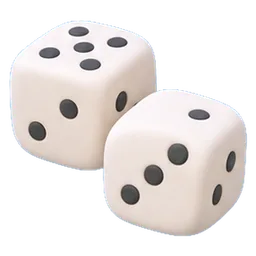
Dice duel
More dots, fewer dots
Each player rolls a die. Whoever has more dots takes a counter. After five rolls, who has more counters?
Ages 4–5
One more, one less
Numbers next to each other
Hold up four fingers. “Show me one more.” “Now show me one less.” Do the same with blocks, steps on the stairs or bites of toast.
Ages 3–5

Pour it
More and less of what you can’t count
Pour different amounts of water into two cups that are the same shape. Which has more? Now pour one of them into a tall thin glass and ask again. Pour it back to check.
Ages 4–5
Guess my number
More and less with numbers
Write 1 to 10 in a row. Think of one of them. Your child guesses and you say only “more” or “less” until they find it, crossing off the numbers it can’t be.
Ages 5
What it teaches
What preschoolers are learning in math
Head Start’s Early Learning Outcomes Framework describes what children are working toward in math by the time they turn 5. It says itself that it is not a checklist, and children get there at different times. In plain words:
Counting
Counts aloud to at least 20, counts about 10 things and answers “How many?”, and knows the last number said is how many there are.
Seeing small numbers
Sees up to 5 things and says how many without counting them.
More and less
Tells whether one group has more, less or the same as another, for groups of at least five.
Sorting
Sorts things into groups by what they look like, weigh, feel like or do.
Patterns
Fills in a missing piece of a simple pattern, copies it somewhere else, carries it on, and finds the part that repeats.
Shapes
Names basic shapes whatever their size or which way they are turned, and describes them by their sides and corners.
Position
Uses and follows words like up, down, in front of and behind.
Measuring
Compares or puts in order up to 5 things by height or weight, with words like shortest, heavier and biggest.
If you have a question about your own child’s development, their doctor or teacher is the person to ask.
Counting and sorting with Cleo
Counting, sorting and pattern games in Cleoland
Six of Cleoland’s 20 games practice the skills on this page. This is what each one plays at ages 4–5. Every game plays at your child’s age, which you set in Settings, so a 3-year-old gets the 2–3 versions.
Which Is More?
Tap the side of the seesaw that is more. It tips, both amounts show, and Cleo says the fact.
Ages 4–5Counting legs, wings and wheels
Jar Sort
Move one piece at a time until each jar holds one color, then one kind of thing.
Ages 4–53 kinds: sea animals, fruit…

Suns & Clouds
Finish the pattern; from 6, fill a grid of suns and clouds with no three the same in a row.
Ages 4–5Harder patterns, a gap in the middle

Order It
Put the cards in order, hottest to coldest or biggest to smallest. A wrong place bounces back and Cleo asks a question that helps.
Ages 4–53–4 things: legs, wheels, seasons
Broken Calculator
Some keys are broken. Make the number another way, then press = to check.
Ages 4–5Make up to 10 with +
Garden Beds
Drag to split the garden into beds. Each sign’s number is its bed’s size, and the plant grows when it’s right.
Ages 4–54×4 garden
At 2–3
Jar Sort
Move one piece at a time until each jar holds one color, then one kind of thing.
Ages 2–32 colors
Suns & Clouds
Finish the pattern; from 6, fill a grid of suns and clouds with no three the same in a row.
Ages 2–3Finish a sun, cloud pattern
Broken Calculator
Some keys are broken. Make the number another way, then press = to check.
Ages 2–3Count 1 to 5 things
Looking for more to play away from a screen? See games for preschoolers and, for the year ahead, math games for kindergarten.

 Try it with Cleo
Count, sort and compare the things your child loves
Your child says what they love, and the games lean to it. At 4–5, Which Is More? counts legs, wings and wheels, Jar Sort sorts three kinds of things, and Suns & Clouds leaves a gap in the pattern to fill.

Questions about counting, sorting and patterns
What are good counting activities for preschoolers?+
The ones that use real things your child can touch and move: counting forks onto the table, sliding toy cars across a line, counting claps with eyes closed, and counting backward to “blast off.” Touching each thing while saying one number is the skill to practice first.
How high should a preschooler be able to count?+
Head Start’s Early Learning Outcomes Framework describes children counting aloud to at least 20, and counting about 10 objects, by the time they turn 5. Between 3 and 4 it describes children saying some number words in order, up to 10. It is a guide, not a test, and children get there at different times.
How do I teach patterns to a preschooler?+
Start with two things taking turns, like spoon, fork, spoon, fork. First your child copies your pattern, then carries it on, then fixes one with a piece missing, then makes their own. Say the pattern out loud together; the rhythm helps.
What is a color sorting game?+
A game where a child puts mixed things into groups by color: red things on the red paper, blue things on the blue. All it needs is a pile of colored things and a place for each color. Counting each group afterward adds counting and “which has more?”
At what age can children sort by color?+
Head Start’s framework describes children sorting toys or other objects by color, shape or size by 36 months, and sorting by harder things such as weight or texture between 4 and 5. Start with two very different colors and build from there.
What is the more or less game?+
Make two small piles of the same thing, ask “Which has more?”, and count to check. Then ask “Which has less?” and “Can you make them the same?” For older preschoolers, play it with numbers: guess my number from 1 to 10, with “more” or “less” as the only clues.
What shapes should a preschooler know?+
Head Start’s framework describes 3-year-olds recognizing and naming a typical circle and square, and sometimes a triangle. By 5 it describes children naming basic shapes whatever their size or which way they are turned, and describing them by their sides and corners.
Keep reading
- Ages 5–6
Math
Math games for kindergarten: counting, adding and shapes
Quick math games with things you already have at home, matched to what kindergarten math covers.
 Ages 3–4
Games
Games for preschoolers: learning games for ages 3 and 4
Simple games for colors, counting, letters and listening that need nothing but you, plus the games Cleo plays at 2–3.
- Ages 4–7
Apps
Math apps for kindergarten: what to look for, and which to try
What kindergarten math covers, what a good math app does, and a fair look at the apps parents ask about.

 Ages 4
Ages
Games for 4-year-olds: what they’re learning and what to play
What most 4-year-olds can do (from the CDC), the games that fit this age, and what to look for in an app.

 Ages 3
Ages
Learning activities for 3-year-olds, and how to choose an app
What most 3-year-olds can do (from the CDC), activities that fit, and what to look for in a learning app at 3.
 Ages 3–5
Learning
Preschool at home: a simple, playful daily rhythm
What to cover in preschool at home, a daily rhythm that works, and activities that need almost no prep.