

Play-based learning
Play-based learning for preschoolers: what it is and how to do it at home
Play-based learning means children learn through play they enjoy and help lead, while an adult sets up the play, joins in and guides it gently toward something worth learning. For preschoolers it covers free play, guided play and games with rules. Here is what the research says, and what it looks like at home.
 What the research says
Updated November 2026 · For ages 2–6 · By the Cleoland team

The short answer
What is play-based learning?
Play-based learning is learning that happens through play a child enjoys and helps lead, instead of through drills or worksheets. The adult’s job is to set up the play, join in and guide it gently toward a goal, such as new words or counting.
Researchers also call it playful learning or learning through play. The LEGO Foundation’s 2017 review of the evidence, by Jennifer Zosh and seven co-authors, describes it by five characteristics. Not all five are needed at every moment, the review says, but over time a child should meet each of them.

Joyful
Fun for its own sake, plus the thrill of a surprise or of finally getting it right. A little frustration on the way is part of it.

Meaningful
It connects to something your child already knows: counting real crackers, not only reciting the numbers.
Actively engaging
Minds-on. Your child is absorbed and doing the thinking, not watching someone else do it.
Iterative
Trying, changing one thing and trying again, like tilting a ramp to see how far the marble rolls.
Socially interactive
Played with someone: sharing ideas, taking turns and talking about what is happening.
Playful learning
The kinds of play: free play, guided play and games
“Playful learning” is the umbrella term for all three. They sit on a line from fully child-led to more adult-shaped, and a good week has some of each.
| Kind | Who leads | What the adult does | At home | What the sources say |
|---|---|---|---|---|
| Free play | Your child | Makes time and space, then stays out of the way | Building a fort, playing shop with the teddies, digging in the yard | The AAP report calls it crucial to how children explore the world and find their own interests. |
| Guided play | Your child, with you alongside | Sets up the play with a goal in mind, or adds a question or comment that nudges it | You add price tags and coins to the pretend shop and wonder aloud how many apples three coins will buy | The IES-published article says it can bring a wider range of academic outcomes than free play. |
| Games with rules | The rules of the game | Chooses the game, teaches the rules and plays along | Simon Says, Go Fish, I Spy, a simple board game | The AAP report says games like Simon Says ask children to control their actions and impulses. |
| For contrast: direct teaching | The adult | Explains and shows | “This letter says /s/. Your turn.” | Not play, but the IES-published article says short bursts can help with some skills, such as phonics. |
The line from free play to guided play to games, with direct instruction at the far end, is how the LEGO Foundation’s review lays it out. The review adds that researchers still debate where free play ends and guided play begins.
The evidence
What the research says about play-based learning
Four sources, each named so you can read it yourself. In short: play is a real way young children learn, an adult guiding the play helps with some skills, and short direct teaching still has a place.
American Academy of Pediatrics
“The Power of Play,” clinical report, Pediatrics, 2018
Says play with parents and other children promotes social-emotional, thinking, language and self-control skills, and calls the benefits of play “extensive and well documented.” It asks pediatricians to encourage play at well-child visits, and preschools to put playful learning ahead of formal instruction.
Skene and colleagues
Meta-analysis in the journal Child Development, 2022
Reviewed 39 studies and pooled 17 of them, covering 3,893 children with average ages from 1 to 8. Guided play did better than direct instruction for early math skills, shape knowledge and switching between tasks, and better than free play for spatial vocabulary. It did not find differences for the other key outcomes, and the authors note that studies defined guided play in different ways.
Regional Educational Laboratory Northeast & Islands
Article published by the US Institute of Education Sciences (IES), 2022
Describes the benefits of free play as mainly social, emotional and developmental, and says guided play can bring a wider range of academic outcomes. It recommends a balance: brief periods of direct teaching, for skills like phonics, inside a play-based day.
The LEGO Foundation
“Learning through play: a review of the evidence,” white paper, 2017
Concludes that learning through play supports healthy development and the learning of both content, such as math, and learning-to-learn skills, such as executive function. It is frank about gaps too: it asks for better-controlled studies and research across cultures, and says not all play is learning.
What the research does not say: that children should never be shown anything directly, or that any play teaches everything. In the 2022 meta-analysis, the clearest results for guided play were in early math and shapes. None of these sources asks for worksheets or long lessons at this age.
Playful learning at home
What play-based learning looks like at home for a preschooler
12 ideas for words, numbers, science and feelings. Each one uses things already in the house and starts as a game, not a lesson.
 Words
Shop with a list
First letters and new words
Draw a shopping list together, with the first letter beside each picture. Your child “reads” it and fetches each thing from the shop on the couch.
Ages 3–5
Story basket
Telling stories
Put three odd things in a basket: a spoon, a sock, a toy lion. Make up a story that uses all three, one sentence each in turn.
Ages 3–6

Rhyme on the stairs
Rhyming
One rhyme for every step: cat, hat, bat, splat. Made-up words count, and usually get the biggest laugh.
Ages 3–5
Numbers
Snack shop
Counting
Price the snacks at one, two or three buttons. Your child pays by counting out buttons, one for each number word.
Ages 3–5

Set the table
One for each
One plate, one fork and one cup for each person. “Do we have enough? How many more do we need?”
Ages 2–5

Sock patterns
Patterns
On laundry day, line up socks: striped, plain, striped, plain. What comes next? Then your child makes one for you.
Ages 3–5
 Science

Sink or float
Guessing and testing
Gather six things. Guess first, then test each one in the bath or a bowl, and sort them into two piles.
Ages 2–5
Ramp races
Cause and effect
Prop a board on a cushion and roll cars down. Change one thing, the tilt or the car, and see what happens to the distance.
Ages 3–6

Ice rescue
Noticing change
Freeze small toys in a tub of water. How can we get them out? Try warm water, salt and a sunny windowsill.
Ages 3–6
 Feelings
Teddy’s bad day
Naming feelings
Teddy’s tower fell down. How does he feel? What might help? Let your child do the comforting.
Ages 2–5
Puppet problems
Solving conflicts
Two puppets want the same red car. Ask your child to tell them what they could do, then act it out.
Ages 3–6

Simon Says
Self-control
Do the action only when you hear “Simon says.” Swap so your child is Simon and you are the one who gets caught.
Ages 3–6
Guided play
How to guide play without taking over
The American Academy of Pediatrics’ report describes guided play as play the child starts, where an adult adds questions or comments that nudge it toward a goal. In practice that is seven small habits.
- 1
Watch first
Give it a minute before you join. See what your child is trying to do, so you can help with their game instead of starting yours.
- 2
Join as a player
Take a small part: a customer in the shop, a passenger on the bus. Your child stays the boss of the story.
- 3
Add one thing
A new prop or a small problem is enough: a price tag, a ramp, “Oh no, the bridge is too short.” Then see what they do with it.
- 4
Wonder out loud
Swap test questions (“What color is this?”) for real ones: “I wonder what would happen if…” and “How could we find out?”
- 5
Help the least you can
The LEGO Foundation’s review gives the example of a puzzle. Handing over each piece and pointing to its place takes the thinking away; a small hint, like turning a piece, leaves your child doing the work.
- 6
Name what they are doing
“You put all the big ones together.” It adds new words without turning the game into a lesson.
- 7
Step back out
Once the game is running again, leave it to them. The AAP’s report calls self-directed play crucial to how children explore the world.
Why not just show them?
The LEGO Foundation’s review describes a study with a new toy. Children who were taught a few of its functions mostly stuck to those; children who saw an adult find one “by accident” explored more and found others themselves. The review adds that this is not a case for zero guidance: children learn from being shown, too.
Plan, play, talk about it
A fact sheet for parents published by IES describes guided play in New Hampshire kindergartens in three beats: a short chat before play, play the children lead with a teacher guiding, and a look back afterward. The same shape works at home.
Common worries
Common worries about play-based learning
Is play-based learning enough before kindergarten?
For much of what a school day asks, play is where it is learned: the AAP’s report says the social skills that come with playful learning help children listen to directions, pay attention and solve disputes with words. Add small, direct moments for the few things play does not teach by itself, like the sound a letter makes. The IES-published article recommends that same mix.
Should I teach letters and numbers directly?
A little, yes. The IES-published article says direct teaching can help in some areas, such as phonics, and suggests brief periods of it inside a play-based day. Two minutes of “this letter says /m/” in the middle of a shop game counts.
My child only wants to play one thing
Use it. Trucks can be counted, sorted by size, parked in patterns, raced down ramps and put into stories. The LEGO Foundation’s review calls this making learning meaningful: tying something new to what a child already knows.
I don’t have hours to play
You don’t need hours. The AAP’s report says playful learning moments are everywhere, and that everyday chores done alongside a parent can be turned into play: matching socks, stirring, setting the table.
Do we need special toys?
No. The AAP’s tips for parents of 1- to 3-year-olds list blocks, plastic containers, wooden spoons and puzzles, and its report cites research linking play with traditional toys to more and richer language than play with electronic toys.
Do screens count as play?
Partly, sometimes. The AAP’s report says real-time play with people remains better for learning at home than digital media, and that active, age-appropriate media may have some benefits, especially when you watch or play together. The World Health Organization says no more than one hour of sedentary screen time a day for 3- and 4-year-olds.
One example
Where Cleoland fits
Cleoland is where kids 2–8+ learn by playing with Cleo: your child says what they love, and Cleo turns it into games, stories, songs and lessons. On the line above it sits with games that have rules, on a screen. Treat it as one short part of a playful day, next to free play, pretend play and play with other people, not instead of them.

I Spy
Cleo spies something with a clue: “something that lives in the sea!” Only one thing fits, and she says why.
Ages 4–58 things: kinds and homes
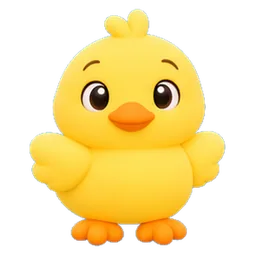
Animal Match
Tap two tiles that go together to clear them, and Cleo says what the pair teaches.
Ages 4–56 pairs: babies, food, homes
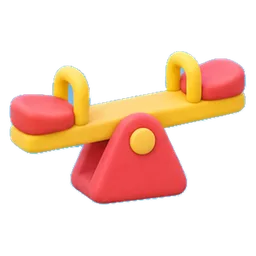
Which Is More?
Tap the side of the seesaw that is more. It tips, both amounts show, and Cleo says the fact.
Ages 4–5Counting legs, wings and wheels

Paint Mixer
Real color learning with Cleo’s paint pots: the colors of things, what two colors make, tints and shades.
Ages 4–5Mixing: red and yellow make…?
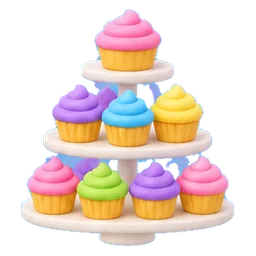
Cake Tower
Build the birthday cake on the star stand, one layer at a time, never a big layer on a small one.
Ages 4–53 layers
Marble Run
Turn the track tiles so it rolls home: the egg to its nest, the ball to the goal.
Ages 4–53–4 tiles to turn
At 2–3 the games are mostly pictures, with Cleo saying every word. The logic puzzles have no scores, stars or timers.

 Try it with Cleo
Play that starts with what your child loves
Your child says “dinosaurs,” and Cleo makes a dinosaur story or song and themes the games on dinosaurs, at their age. Sit beside them and play along.

Questions about play-based learning
What is play-based learning?+
Play-based learning is learning that happens through play a child enjoys and helps lead, instead of through drills or worksheets. An adult sets up the play, joins in and guides it gently toward a goal, such as new words or counting.
What is playful learning?+
Playful learning is the umbrella term researchers use for free play, guided play and games. The LEGO Foundation’s 2017 review of the evidence describes it as joyful, meaningful, actively engaging, iterative and socially interactive.
What is guided play?+
Guided play is play the child still leads, with an adult who has a learning goal in mind. The adult sets up the materials, or adds a question or comment that nudges the play, without taking it over.
What is the difference between free play and guided play?+
In free play the child chooses everything and the adult stays back. In guided play the child still leads, but an adult shapes the setting or asks questions with a goal in mind. The American Academy of Pediatrics’ report on play values both.
Does play-based learning work?+
Research supports it for young children, with limits. A 2022 meta-analysis in Child Development found guided play did better than direct instruction for early math skills, shape knowledge and task switching, and did not find differences for the other key outcomes.
What are examples of play-based learning for preschoolers?+
A pretend shop with a picture shopping list and buttons to count, a sink-or-float test in the bath, sock patterns on laundry day, a story made from three things in a basket, and Simon Says for listening and self-control.
Is play-based learning enough to get ready for kindergarten?+
Play builds much of what kindergarten asks for, such as paying attention, taking turns, talking and early math ideas. Short, direct moments still help with a few skills, like letter sounds, and they fit easily inside play.
Sources
- American Academy of Pediatrics: The Power of Play: A Pediatric Role in Enhancing Development in Young Children (Pediatrics, 2018)
- American Academy of Pediatrics, HealthyChildren.org: news release on The Power of Play (August 20, 2018)
- The LEGO Foundation: Learning through play: a review of the evidence (Zosh et al., 2017)
- Skene et al.: Can guidance during play enhance children’s learning and development in educational contexts? A systematic review and meta-analysis (Child Development, 2022)
- Regional Educational Laboratory Northeast & Islands, published by IES: Prioritizing Play: The Importance of Play-based Learning in Early Education (2022)
- Regional Educational Laboratory Northeast & Islands, published by IES: What Is Play-based Learning in Kindergarten? A Resource for Parents and Caregivers (2023)
- World Health Organization: To grow up healthy, children need to sit less and play more (2019)
Keep reading
 Ages 3–5
Learning
Preschool at home: a simple, playful daily rhythm
What to cover in preschool at home, a daily rhythm that works, and activities that need almost no prep.
 Ages 4–5
School
Kindergarten readiness checklist: what helps, and what can wait
A printable checklist of the everyday skills that help children start kindergarten, with a playful way to practice each, and what can wait.
 Ages 3–4
Games
Games for preschoolers: learning games for ages 3 and 4
Simple games for colors, counting, letters and listening that need nothing but you, plus the games Cleo plays at 2–3.
 Ages 3
Ages
Learning activities for 3-year-olds, and how to choose an app
What most 3-year-olds can do (from the CDC), activities that fit, and what to look for in a learning app at 3.
 Ages 4
Ages
Games for 4-year-olds: what they’re learning and what to play
What most 4-year-olds can do (from the CDC), the games that fit this age, and what to look for in an app.
 Ages 3–5
Math
Counting, shape, pattern and sorting activities for preschoolers
No-prep counting, sorting, pattern and shape activities for ages 3 to 5, with a color sorting game and a more or less game.